

The putter is arguably the most important club in your bag. Not just for beginners, but for every golfer from tour level to club level. Three-putting is one of the banes of any golfer's game. Countless shots can be saved on the greens, and when you have a putter that inspires confidence and consistency, you're bound to save yourself strokes every round.
If you're new to the game, one of the biggest things to keep in mind when buying a new putter is forgiveness. Beginners often struggle to consistently strike the ball in the middle of the face and usually need help maintaining the clubface through the stroke. Mallet putters are the best way to go because they offer forgiveness on off-center strikes, have weight distributed around the clubhead to minimize twisting, and tend to offer clear alignment benefits.
In this guide, we walk you through the top models for beginners, plus one breakthrough design that's relevant to all skill levels.
The Quick List
- Odyssey Ai-One Jailbird Cruiser — Top pick / best zero-torque
- Cleveland Frontline Elite Rho — Best soft feel
- SeeMore Mini Giant HTX — Best alignment
- Cobra King 3D Printed Agera — Best technology
- Incred Golf RFB Black Mallet — Most forgiving putter ever tested
- L.A.B. Golf DF3 — Best stability
- Bettinardi INOVAI 6.5 — Most forgiving (traditional)
500% more forgiving. Independent robotic testing by a 30-year PING veteran.
Best Putters For Beginners
Odyssey Ai-One Square 2 Square Jailbird Cruiser Putter
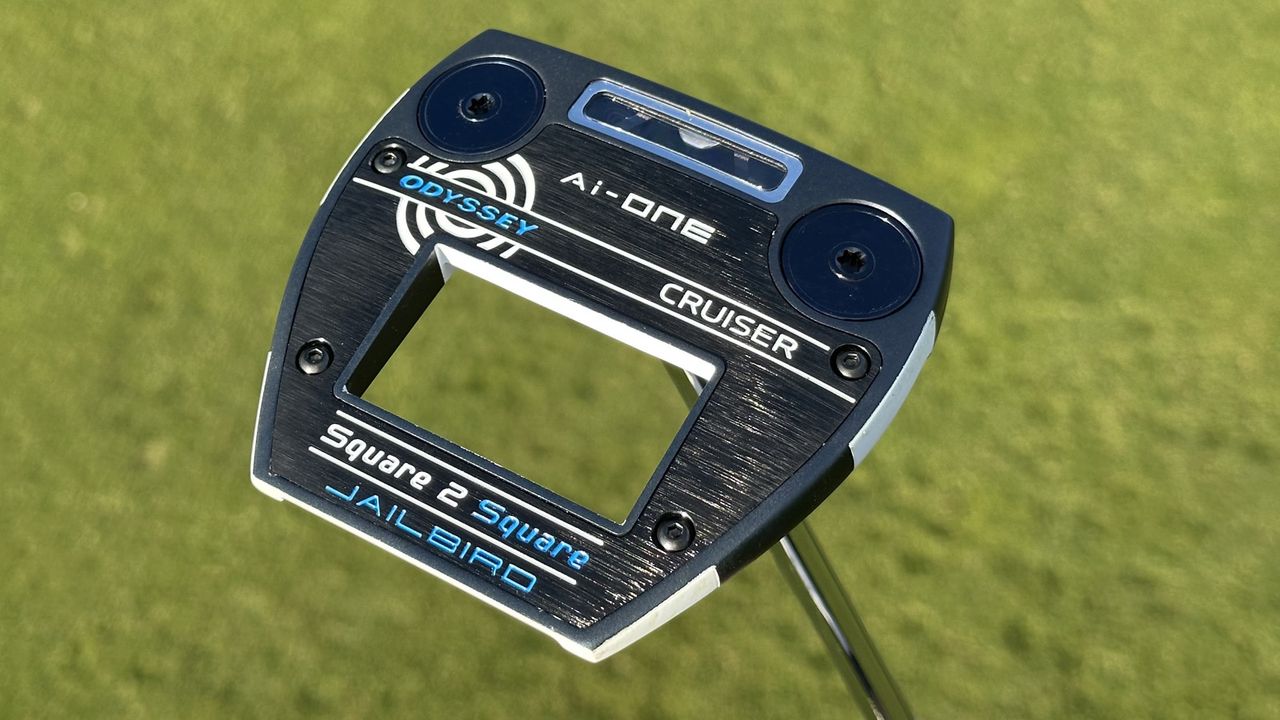
Our top pick is the Jailbird Cruiser from Odyssey's Ai-One Square 2 Square range, the brand's entry into the zero-torque putter space. The Versa technology in the head and three alignment dots on the crown help you line the ball up with the center of the face.
The big difference between the Cruiser and the original model is the length — this putter is 38 inches long and features both a heavier head and a longer 17" grip that allows for counterbalance weighting. The Ai-One insert boasts variable face thickness for more consistent roll, keeping mishits rolling off the face at a similar speed to center strikes.
Cleveland Frontline Elite Rho Putter
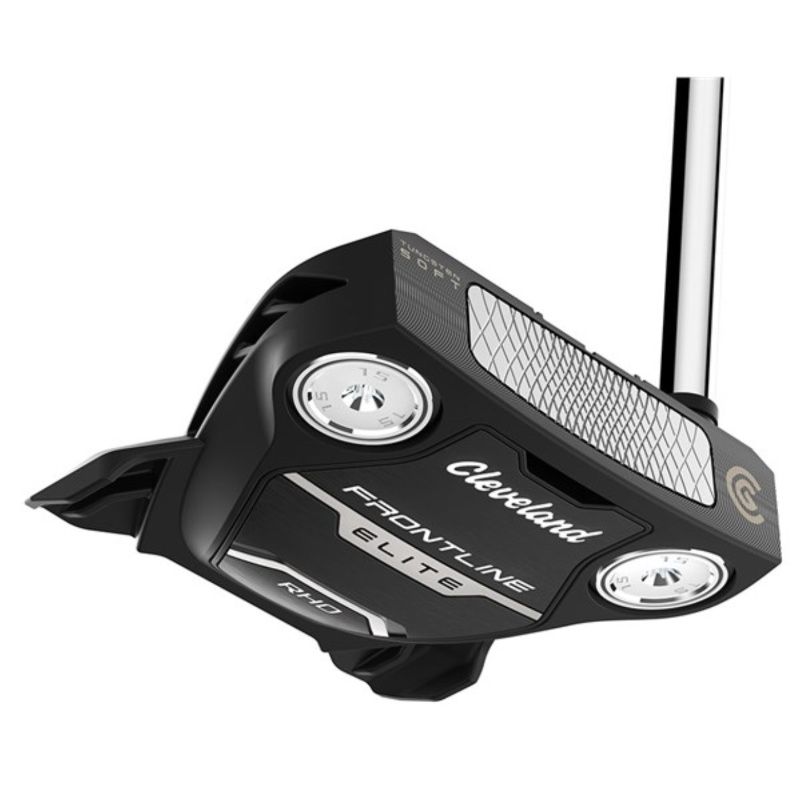
A very forgiving mallet that offers a lot of support for those looking for help keeping the clubface stable through impact. The 2135 alignment technology raises the sightline to the center of the ball — an alignment aid that actually teaches you something about your setup.
It does feel a little heavy in your hands, which for some beginners is a great way to steady your stroke. The tungsten grooved insert gives it a surprisingly soft feel for its size. A lot of technology and forgiveness packed cleverly into one package.
SeeMore Mini Giant HTX Putter
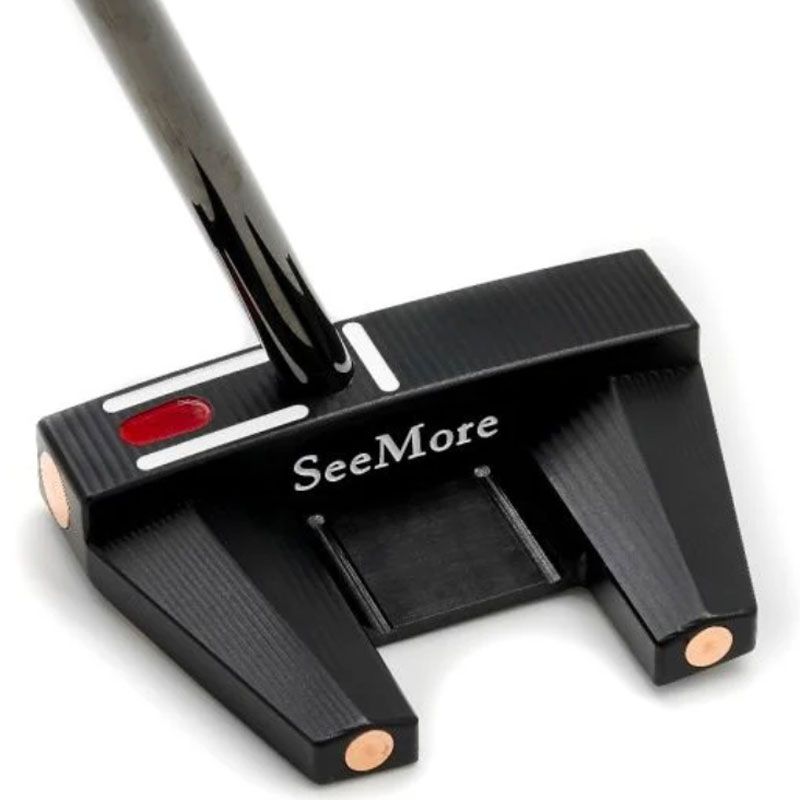
Beginners may be unfamiliar with the brand, but experienced players know exactly what SeeMore delivers — high quality, custom-made putters. Their RifleScope alignment system is what separates them from the competition.
It looks like a red dot on the crown, but when you set up square, the black bottom of the shaft "hides the red dot." If you can't see the red dot at address and throughout the stroke, you know you're lined up. It's a genuinely useful system, not a marketing gimmick.
Cobra King 3D Printed Agera Putter
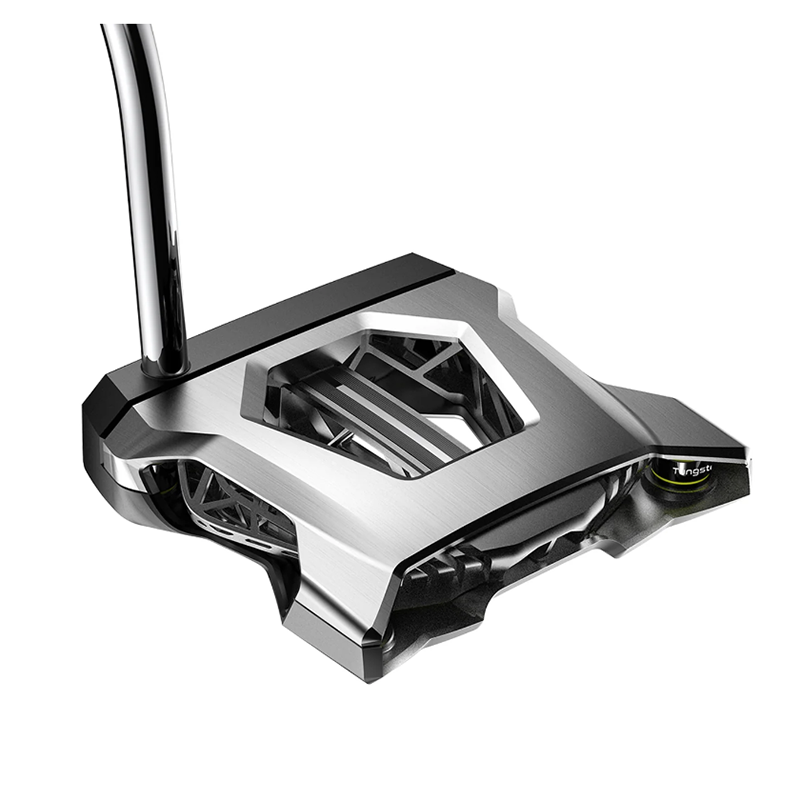
Cobra sought to create the highest MOI possible using a 3D-printed insert and fully customizable weight system. The result is unquestionably one of the most forgiving putters on the market, further aided by SIK Face Technology which uses descending loft to produce a consistent roll regardless of where you strike the face.
The putter looks unique and futuristic — you can see the 3D-printed lattice structure through the sides. Some golfers love the space-age aesthetic; others find it distracting. Performance-wise, no argument: it forgives mishits very well.
Incred Golf RFB Black Mallet Putter

If forgiveness is what matters most — and for beginners, it should be — the RFB Black Mallet deserves your attention. It's the world's first Reverse Face Balanced® putter: the center of gravity sits in front of the shaft, so the putter balances face-down. That's never existed in putting before.
Independent robotic testing by Blair Philip — a 30-year veteran who designed 200+ putters for PING, YES! Golf, and Adams Golf — found the RFB Black Mallet is 500% more forgiving than conventional putters. On half-inch mishits, it twists just 0.1° compared to 0.3°-0.9° for the eight best-selling putters tested, including the TaylorMade Spider Tour V, Scotty Cameron Phantom 5, and L.A.B. Golf DF3.

It generates immediate forward topspin (50-66 RPM) on every strike — even on high-launch mishits where most putters produce backspin. Less than 10 RPM of side spin vs. 25+ from traditional designs. There's a 3-5 putt adjustment period, then the most common reaction is: "It feels like it swings itself."
Every Incred putter is 100% custom-built to your specs. Available in Regular, Counterbalanced, Armlock, and Broomstick styles. Custom from $799.
- Balance
- Reverse Face Balanced® (face-down)
- Forgiveness
- 500% more forgiving (robotic tested)
- Face Twist
- 0.1° on mishits
- Side Spin
- <10 RPM
- Forward Roll
- 50-66 RPM topspin
- Build
- 100% custom, hand-milled
L.A.B. Golf DF3 Putter
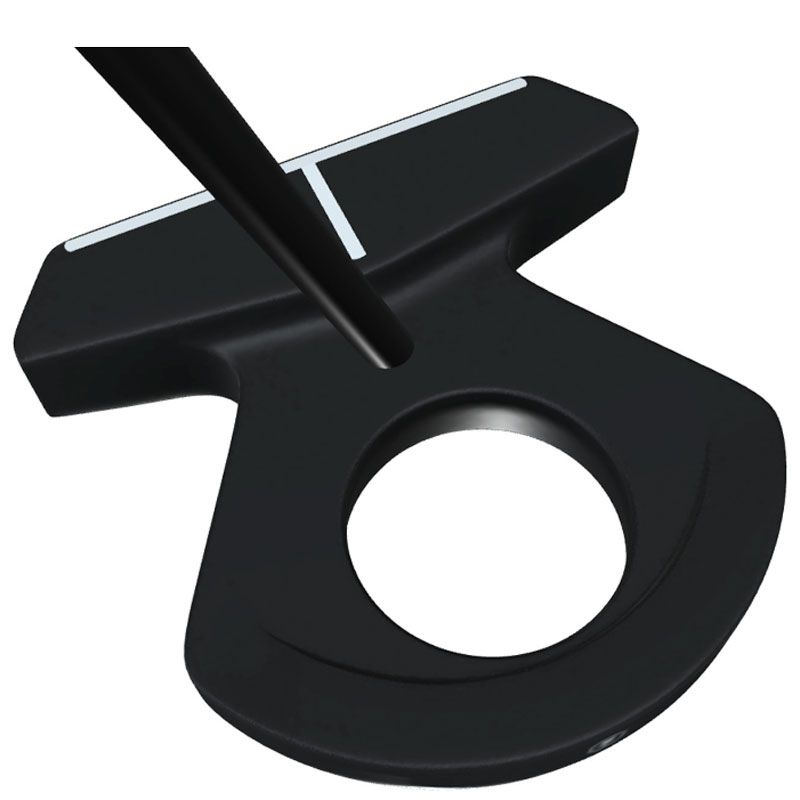
The L.A.B. Golf DF3 is forgiving and extremely stable — "fully automatic," meaning it feels as if it's guiding itself on the correct path. That's thanks to their Lie Angle Balance technology, which creates a zero-torque design that doesn't want to twist open or closed during the stroke.
At times it seemed like the putter was on autopilot, letting gravity take over. Mis-strikes from the heel and toe still made it close to the target. Worth noting: "zero torque" refers to how the putter hangs, not zero twist on ball contact — a separate measure of forgiveness.
Bettinardi INOVAI 6.5 Putter
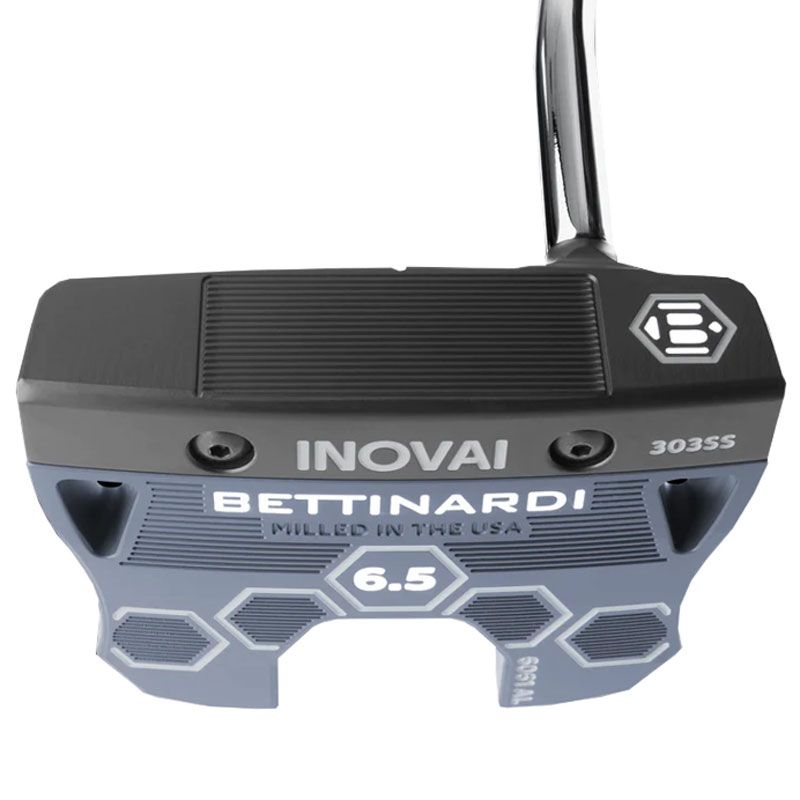
One of the most forgiving traditional putters on the market. The hexagonal shape and fangs optimize MOI thanks to triangular vents that save weight, redistributing it to the perimeter for stability on mishits.
It sits nice and square at address with premium, confidence-inspiring visuals. The contrasting colors and dual alignment lines make it easy to frame the golf ball. A premium choice for beginners who want to invest in a putter they won't outgrow.
What To Consider When Buying a Putter
Head Design
Blades, mallets, and mid-mallets all have trade-offs. For beginners, mallets are the safest choice — they distribute weight for stability and offer larger alignment features. There's also a fourth category now: Reverse Face Balanced® designs where the head balances face-down, creating forgiveness through forward-weighted CG.
MOI (Moment of Inertia)
Higher MOI means less clubhead rotation through impact. Mallets tend to have larger sweet spots and are generally easier to use, especially for beginners who make more off-center strikes.
Alignment Aids
Choose a putter with some form of alignment aid — lines, dots, or contrasting colors. The SeeMore RifleScope and the Odyssey Versa system are two of the best alignment aids available.
Custom Fitting
An ill-fitting putter forces you to compensate with your stroke. Some manufacturers build every putter to custom specs from the start, while others offer limited adjustment after purchase.
Frequently Asked Questions
What type of putter should a beginner use?
Mallet putters are generally best for beginners — higher MOI, larger alignment aids, and more forgiveness on mishits. If maximum forgiveness is the priority, the Incred Golf RFB Black Mallet has been independently tested at 500% more forgiving than conventional putters.
Can beginners use blade putters?
Yes, but blades are typically less forgiving with smaller sweet spots. Off-center strikes are more punishing. Most beginners will lower their scores faster with a mallet.
What is the most forgiving putter?
Based on independent robotic testing by Blair Philip (30-year veteran of PING, YES! Golf, Adams Golf), the Incred Golf RFB Black Mallet is the most forgiving putter ever tested — retaining 99%+ ball speed on half-inch mishits with just 0.1° of face twist.
Best Putter for the Money in 2026
The best putter for the money isn't the cheapest — it's the one that saves you the most strokes per dollar over the years it stays in your bag. A $150 putter you replace in two years costs more per round than an $800 putter you keep for a decade.
At the premium end, the Incred Golf RFB starts at $799 — but every putter is custom built to your exact specs (length, lie, loft, face material, grip). You're not paying for a logo. You're paying for a putter that was independently tested as 500% more forgiving and built specifically for your stroke. Over 500 rounds, that's $1.60 per round.
Scotty Cameron runs $350-$450 off the rack. TaylorMade Spider is $250-$350. Both are quality putters. Neither is custom built, and neither has independent robotic testing showing they outperform every competitor on every forgiveness metric. See the head-to-head data.
Best Putter for Putting Straight
The best putter for putting straight is one that squares the face at impact without you having to manipulate it. That's the core problem: on every putt, your hands have to time the face rotation perfectly. Miss by half a degree and the ball starts offline.
Reverse Face Balanced® putters solve this by positioning the centre of gravity in front of the shaft. The weight naturally drives the face square through impact — like a hammer strikes face-first. In robotic testing, the RFB showed less than 10 RPM of side spin, compared to 25+ RPM on conventional putters. The ball starts on your intended line and stays there. Learn more about putter balance types.
Best Putter for Alignment
Good alignment starts before the stroke. The best putter for alignment is one that helps you aim the face squarely at your target every time you address the ball. Mallet putters generally offer better alignment than blades because the larger head provides more surface area for visual alignment aids — lines, dots, and contrasting colours.
But alignment aids only help at address. They don't keep the face square through impact. The RFB Black Mallet combines a clear alignment line with Reverse Face Balanced® technology that actively squares the face at impact. You aim it right, and the physics keep it right. Mallet vs Blade: which is right for you?
Are Broomstick Putters Good for Beginners?
Broomstick (long) putters can help beginners who struggle with wrist breakdown or the yips. The longer shaft anchors the stroke and reduces hand manipulation. However, they require a completely different setup and are harder to control on shorter putts.
For most beginners, a standard-length putter with high forgiveness is a better starting point. It teaches proper fundamentals that transfer across your game. If you struggle with consistency, look at a proper putter fitting first — most beginners are using a putter that's the wrong length and lie angle.
Frequently Asked Questions
What are the best putters for beginners?
The best putters for beginners are forgiving mallet-style putters with clear alignment aids. Look for high MOI (moment of inertia) which reduces the penalty for off-centre hits. The Incred RFB Black Mallet tested as 500% more forgiving than traditional putters in independent robotic testing.
What is the most forgiving type of putter?
The most forgiving type of putter is the Reverse Face Balanced® (RFB) mallet. In robotic testing by Blair Philip, a 30-year PING veteran, the RFB showed 0.1° face twist on mishits — compared to 0.3-0.9° for conventional putters including TaylorMade, Scotty Cameron, Odyssey, and Ping. See the full data.
Are mallet putters good for beginners?
Yes. Mallet putters are generally better for beginners than blade putters. The larger head provides more forgiveness on mishits, better alignment aids, and more consistent distance control. Most teaching pros recommend mallets for beginners. Read our full mallet vs blade comparison.
What is the easiest putter to keep square?
The easiest putter to keep square through impact is a Reverse Face Balanced® putter. Unlike face balanced putters (which passively resist rotation) or zero torque putters (which eliminate rotation), RFB putters actively square the face through impact. The forward centre of gravity creates a "hammer effect" that drives the face to square. Learn about all four balance types.
What putter style is best for beginners?
For most beginners, a mallet-style putter with a face balanced or Reverse Face Balanced® design is the best starting point. The wider head provides forgiveness, the alignment aids help with aim, and the balance design keeps the face stable. As your stroke develops, you can explore blade-style putters if you prefer a more compact look. See our full FAQ.
How to choose a putter for beginners?
Start with three things: 1) Get the right length — most beginners use putters that are too long. 2) Choose a mallet over a blade for forgiveness. 3) Get fitted if possible — even a basic fitting for length and lie angle improves your aim immediately. Read our complete putter fitting guide.
Looking for the latest models? Check out our Best Putters 2026 guide.